
Annual Review 2025
Finding answers together
Understanding the wide variety of inherited retinal diseases (IRDs) requires hundreds of people working closely together.
Beyond researchers themselves – whose varied expertise spans from geneticists in the lab to clinicians – many people diagnosed with these rare conditions contribute to both discovering the genes that cause these conditions and learn how they progress.
The VENTURE Study – a partnership between CERA and the University of Melbourne – has now surpassed 700 people, with 50 unique genes included in the registry.
These people, who have rare conditions like retinitis pigmentosa, Usher syndrome and Stargardt’s disease, and their family members – who may be genetic carriers – are together improving how IRDs are understood. This is helping others with these conditions receive an accurate diagnosis, and making it possible for new treatments to be trialled earlier.
CERA Deputy Director Professor Lauren Ayton AM, who leads the project alongside Head of Retinal Gene Therapy Research Dr Tom Edwards, says one of the most exciting things is how it has enabled an ecosystem of researchers to grow around the participants.
“VENTURE now has a genetic arm, called ‘GenoVision’, which involves geneticists, molecular biologists, variant curators, bioinformaticians and pathology collectors,” Professor Ayton says.
“We work closely on projects for people with dual deaf-blindness, such as Usher syndrome, and so have strong collaborations with other health professions like audiology, speech pathology, neurology and physiotherapy.
“The strength of a multidisciplinary team is that everyone brings a different perspective to a question,” says Professor Ayton.
“For example, the work led by Dr Ceecee Britten-Jones to find new IRD genes includes our clinical team, lab scientists, computer scientists and data analysts, all contributing their special skills and views to the project.”
Understanding progress
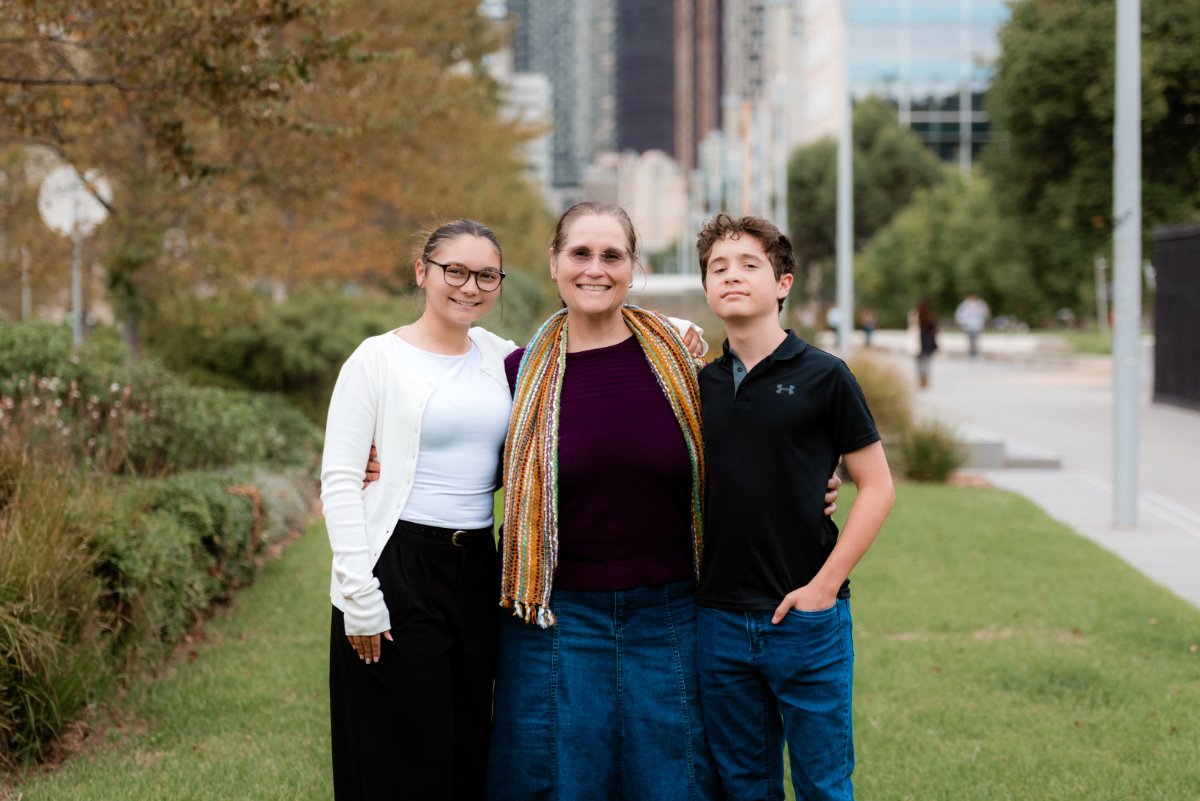
Jonah Marcantelli likes sport, movies and video games – an ideal weekend for him is relaxing on the couch.
“I like Dune a whole lot, I can’t wait for the third one,” he says.
He was diagnosed with retinitis pigmentosa in 2024, a year after the family moved to Australia from the US, although the diagnosis wasn’t completely unexpected.
Jonah’s grandfather and great uncle both have retinitis pigmentosa and are legally blind, but the condition wasn’t initially apparent among the women in the family.
“We were initially told there was a 50-50 chance of passing the condition onto our children, and we just went with the flow until my sister, who is two years younger than me, was diagnosed – that changed the trajectory of her life,” Mindy, Jonah’s mum, says.
Mindy has three other sisters who are confirmed carriers – one with severe symptoms and another who has a diagnosed son.
When her siblings were diagnosed, Mindy says there was little support available.
“We felt powerless back then – nobody was sitting us down and asking what we’re going to do, how we’re going to live our lives and make decisions about starting a family.”
Today, the opportunities and information available are very different.
Under the VENTURE Study, Jonah is a part of research monitoring the progression of his condition and is eagerly awaiting the chance to participate in a clinical trial should a treatment become available.
Mindy is also in a carrier study, led by Dr Sena Gocuk, which is working to understand the perspectives of people who carry the genes associated with IRDs, to improve how they receive counselling and support.
The family have seen how diagnosis and monitoring of the condition has changed, and are looking forward to more opportunities on the horizon.
Jonah’s sister Adelaide has been inspired by the research and doing work experience with Professor Ayton – she is now considering her own career in research.
“Having the work experience just really opened up my eyes, literally, to see what’s really going on in my brother’s and all these other people’s eyes,” Adelaide says.
“Seeing how these people are just trying to help minimise the disease, and after having a feel for it, I want to see how I can help.”
Research perspective
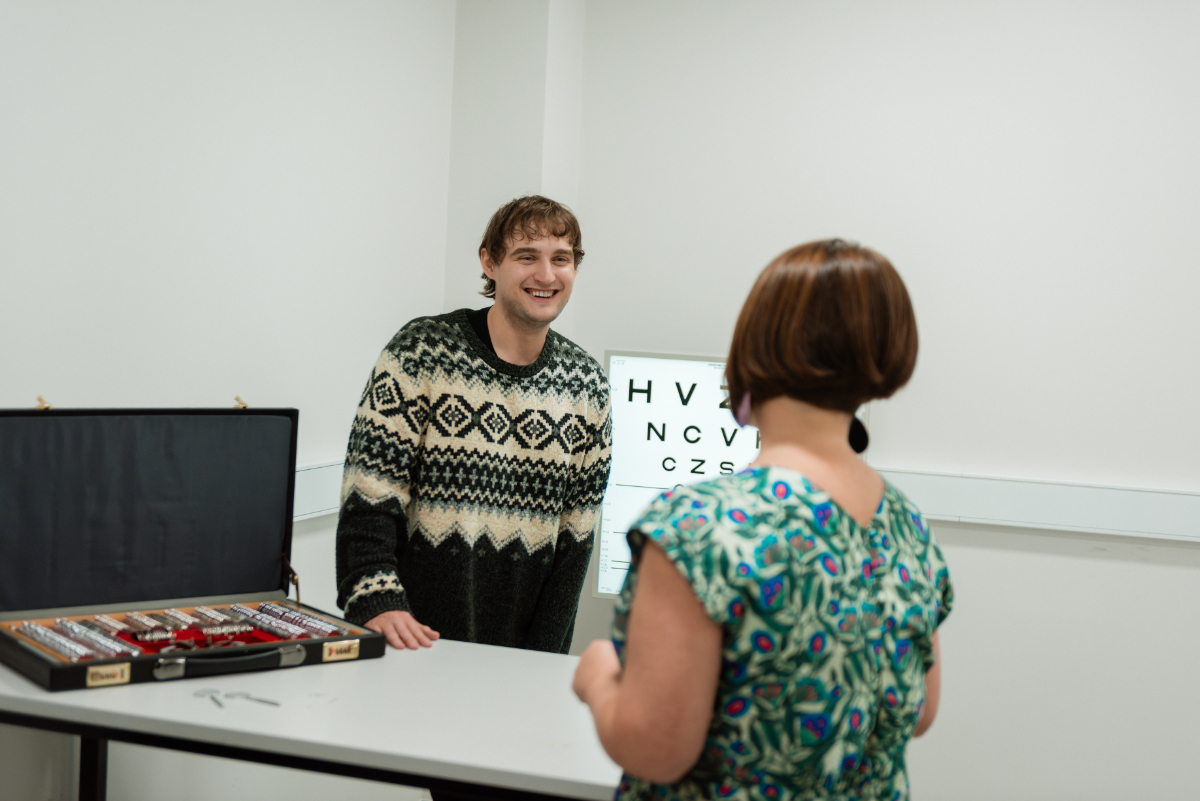
Ivan Volkov has a biomedical engineering degree and works as a researcher at an organisation researching workplace mental health.
“I like research for the sake of research, it’s interesting and fun to go investigate and explore.”
He was only recently diagnosed with retinitis pigmentosa.
“I always had problems with my eyesight, but last year I found I really didn’t have any peripheral vision,” he says.
He was referred to ophthalmology from his optometrist. With no known family history of the condition, it was genetic testing that confirmed the diagnosis.
“I now know what is happening and what to expect later in life,” Ivan says.
After being added to the VENTURE registry, he has also participated in genetic research projects.
“It’s all been so fast, super quick and easy, and a lot of explanation along the way to what it all means. I did some clinical trials for my masters’ project and it’s like, wow, I’m the guinea pig now!”
He says that should a trial for his particular form of retinitis pigmentosa come up, he would take it right away.
“As a participant in the VENTURE Study, I would be notified if there was a trial, and why not? It couldn’t hurt.”
This story was originally published in Creating the future in sight: Annual Review 2025.