Visionary Autumn 2026
Winning the glaucoma game
Asher Kozma is glad he’s stuck with CERA and taken part in cell-saving glaucoma research.
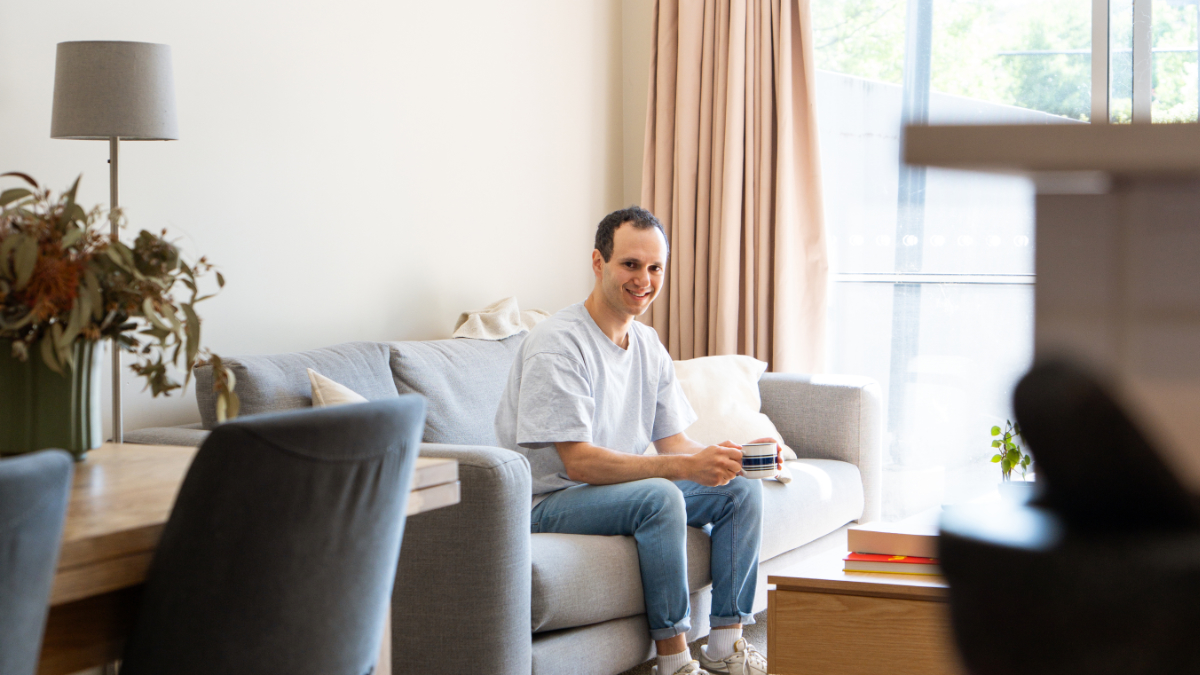
It was a Sunday morning in January 2020, when now 31-year-old Asher Kozma had just finished playing a game of squash with his mates in south-east Melbourne.
“It was a great session. We were all on our ‘A game’. But afterwards I felt a sensation in my left eye,” says Asher.
“I went home, to get ready to leave for a barbeque, and then the pain very quickly became more painful.
“I was like, this is not just like an itch, but I had no idea what it was as I’d never experienced that before.”
Hoping the pain would subside, Asher went to the barbeque as planned, where the pain quickly became awful and he couldn’t see out of his left eye.
“I was a little freaked out and I thought – am I going blind? Have I done something to my eye?,” he says.
“In that moment I started to appreciate the things that we all take for granted.
“I wondered what my life would be like without vision. How would I do my job? Would I be able to still play squash?”
Asher’s day, which started with friends, ended in the emergency department at the Royal Victorian Eye and Ear Hospital, where he was diagnosed with pigment dispersion syndrome.
“It was an incredibly frightening moment I’ll never forget.”
A day to remember
On that day back in 2020, doctors discovered that Asher’s eye pressure was through the roof.
Sustained eye pressure like this is closely associated with glaucoma, in which the light-sensing retinal ganglion cells in the eye die off leading to vision loss.
“The emergency doctor also couldn’t believe how cloudy my eye was,” says Asher.
“The liquid in it was full of these microscopic pigments which I would later find out were flaking off my iris, which clogs the drainage of my eye. It’s then that pressure in Asher’s eye rises and he gets intense pain.
“They put in some eye drops to relieve the pressure – which I still use to help manage my condition – and after 20 minutes the pain subsided and the pressure went down.”
It’s manageable, but it’s an ongoing condition that needs be taken care of. Pigment dispersion syndrome isn’t glaucoma, but Asher is at a very high risk of getting glaucoma due to the pressure in his eye.
“I generally only feel very high pressure after an intense game of squash,” he says.
“I’ve been playing squash since I was a kid and it’s an important part of my lifestyle. It’s high energy and it sharpens the mind. I find it almost cathartic. But at the same time, it’s the cause of this, this thing that threatens my vision.”
Being able to understand the risks Asher can manage it, for now.
Asher started seeing Professor Keith Martin for managing his condition.
He was then referred to participate in research at CERA.
Giving back
Asher’s condition continues to be well managed, though in the long-term, his vision is still at risk.
Discoveries of new ways to help the retinal ganglion cells in his eye survive would be a welcome addition to helping him protect his vision.
After participating in trials at CERA to investigate new ways to manage the condition, Asher is grateful that he could contribute to research that has the potential to help people like him.
“CERA has brilliant minds, great leadership and a fantastic vision. They need continued funding and generous donors from the community to support the amazing breakthroughs that mean conditions like mine can be diagnosed and treated,” he says.
“Research discoveries just don’t happen by accident.
“The simple fact is that CERA is working towards everyone having better vision for longer and developing treatments that are accessible and affordable.
“It’s important research that can help people like me into the future.”