Living legacy to eye research
Annual Review 2025
Living legacy to eye research
Peter and Jo Manger have valued community service and always looked to how they can make a meaningful difference in people’s lives.
Listen to this story
They are now seeing the impact of their legacy after generously transferring a bequest in their will to a living gift to CERA.
The pair came from modest homes, with Peter being the first in his family to go to university, and Jo qualifying as an occupational therapist.
As well as being a stay-at-home mother raising their four children, Jo helped with Meals on Wheels and was an audio reader for the news at Vision Australia for 20 years.
“I became a consulting engineer, then a director for 21 years and a managing director of a large company for six years,” says Peter.
He was the project coordinator for the construction of the MCG’s light towers and the Great Southern Stand, an ocean yachtsman, and a Rotarian.
As a member of the Rotary Club, Peter volunteered to build a roofing factory in Timor-Leste.
“We also became the largest supplier of water tanks and manufactured several thousand 200 litre tanks to hold grain and prevent losses by vermin. Many of these tanks were gifted to the community,” says Peter.
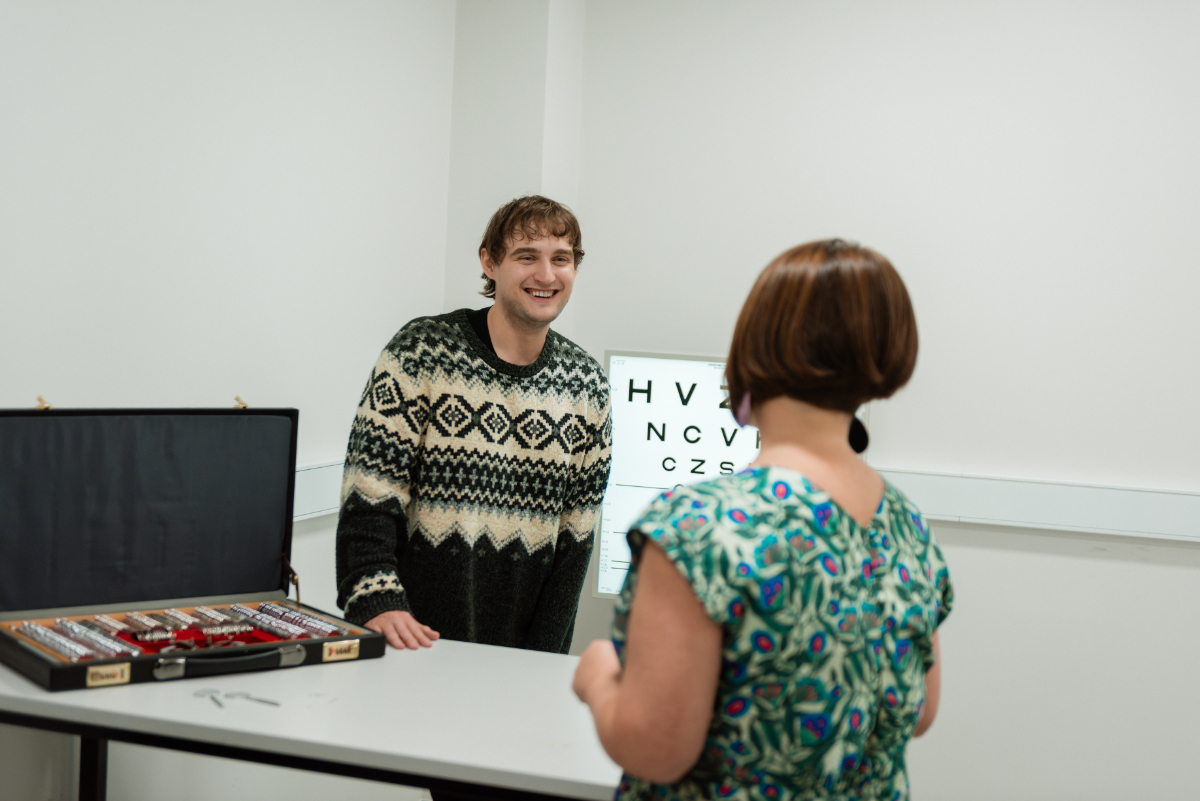
The Manger’s giving resulted in the opening of the Manger Laser Room at Cerulea Clinical Trials – which houses two sophisticated lasers used in trials supporting new treatments for age-related macular degeneration (AMD) and choroidal melanoma.
The retinal rejuvenation therapy laser, specifically designed to treat people with AMD, is a unique piece of equipment, made by Australian-owned laser manufacturing company Nova Eye in South Australia.
Currently AMD is the most common cause of vision loss among older people, affecting 1 in 7 people over 50. While methods are available for treating the later stages of the disease to slow vision loss, there is not yet a way to slow progression from the early stages to these late, vision-threatening stages of AMD.
The laser was designed specifically to address this need, with trials delivering a very short and targeted pulse of energy which stimulates an important layer in the retina responsible for keeping photoreceptors alive – the cells required to see.
After first making a bequest in their will to CERA, Peter and Jo then realised that it would be much more satisfying to be able to talk to the recipients and understand the range of projects which need funding.
“Jo had poor eyesight from the age of 10. With cataract surgery in 2021 Jo’s eyesight dramatically improved with 20/20 vision in her right eye and she was able to discard her glasses. But her left eye had AMD and she needs regular injections,” says Peter.
“It was when we met CERA’s impressive Head of Macular Research, Professor Robyn Guymer AM, and understood her important research that we believed our donation to CERA would be well utilised.” Peter and Jo decided to donate now instead of leaving their money to CERA in their will as they can witness their implementation and see the benefits.
“We also receive tax benefits which enables us to give more,” says Peter.
“After raising four children Jo and I had enough assets to consider bequests in our wills, and we both strongly believe that those who can do so have a duty to be philanthropic.”
This story was originally published in Creating the future in sight: Annual Review 2025.