
Stories
Legacy of sight honoured
CERA has recognised the enormous legacy of long-time supporter Peter Clemenger AO with the unveiling of the Clemenger Seminar Room.
At a ceremony in Melbourne, CERA Managing Director Professor Keith Martin and Peter Clemenger AO unveiled the Clemenger Seminar Room in recognition of his longstanding contribution to ending vision loss.
Speaking at the event, Professor Martin said Peter Clemenger had made a transformative impact on eye research.
“Peter is a true icon and has made enormous contributions to the cultural and medical research landscape in Melbourne, including the enormous amount of support that he has given to CERA over the years,” Professor Martin said.
“Recognising this with the Clemenger Seminar Room is a small way we can recognise his remarkable generosity.”
Peter Clemenger said he was pleased to have seen CERA’s achievements during his time supporting the organisation.
“CERA has been a remarkable success for Victoria and Australia,” he said.
“The fact that CERA is a top-four eye research institute in the world is an immense source of pride and should be lauded.”
The Joan and Peter Clemenger Foundation has supported CERA’s research for nearly 30 years.
Peter’s late wife, Joan Clemenger AO, who passed away in 2022, lived with age-related macular degeneration and was a patient of CERA Deputy Director Professor Robyn Guymer AM.
Peter Clemenger also has a personal connection to vision loss – he lost sight in his left eye at the age of four after his brother accidentally struck him with a spade.
These experiences inspired Joan and Peter’s commitment to supporting eye research to protect the vision of more people.
In 2014, a donation from Joan and Peter Clemenger helped fund the purchase of Australia’s first automated stem cell robot at CERA.
The technology automated the production of stem cells and played a crucial role in CERA’s research. It played a key role in identifying the unique genetic signatures associated with AMD.
This device also helped launch the work of Professor Raymond Wong, Head of Cellular Reprogramming at CERA, whose research has led to the establishment of the start-up company Mirugen.
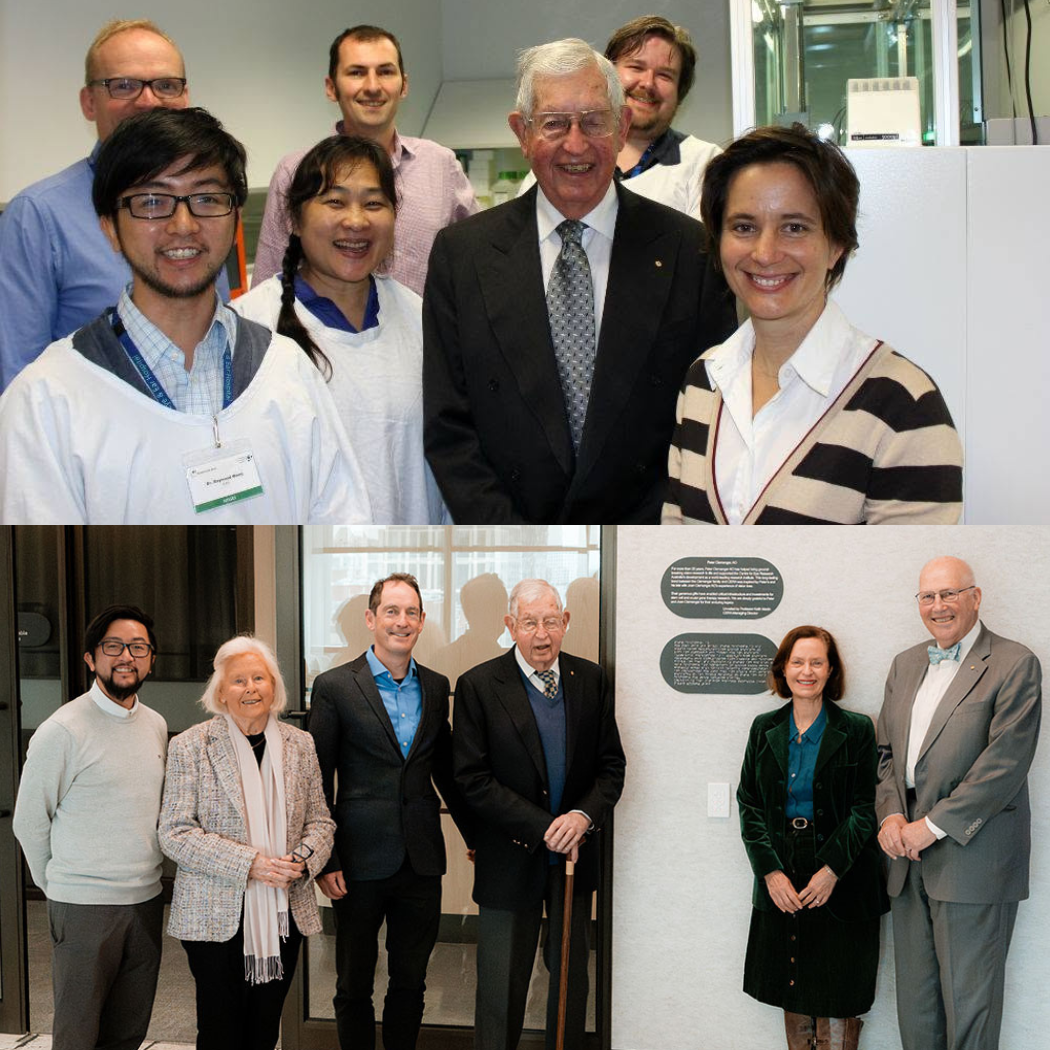
Mirugen has since attracted more than $7 million in funding to advance a pioneering research to preserve vision in people with retinal disease by reprogramming retinal cells to become new photoreceptors, replacing cells damaged by disease.
“This is a new technology that we are developing, and one we are all really excited about. Peter’s generous support at the early, critical stage was instrumental in getting our research program off the ground, and we are very grateful for this support.” Professor Wong said.
Through his advertising agency, Clemenger BBDO, Peter also worked with CERA Founding Managing Director Professor Hugh R Taylor AC on public health campaigns promoting the use of sunglasses to protect eyes from UV radiation.
The Don’t Fry Your Eyes campaign, which featured eggs representing eyes being fried to a crisp in a pan, received a major award at the Cannes Lions Awards when it debuted.
More recently Peter Clemenger has supported CERA’s continued growth by supporting the research in its new genetic engineering laboratory space at 200 Victoria Parade where the conference room is located.
Professor Martin said he believed the next transformative breakthrough in eye research will be discussed within the walls of the newly named seminar room.
“This is CERA’s 30th year, and we hope that this seminar room will be a home for the next 30 years of conversations we have as we share and plan research working towards new and improved treatments for vision loss and blindness.”