
Careers and study
2026-2027 Hector Maclean Scholarship Projects
Explore research projects tailored for the Hector Maclean Summer Scholarship and find out how to apply.
The Hector Maclean Scholarship funds summer research studentships within the Department of Ophthalmology, based at the Centre for Eye Research Australia (CERA) and The Royal Victorian Eye and Ear Hospital.
Eligibility
Students enrolled in a University of Melbourne science, biomedicine, medicine or other relevant undergraduate or postgraduate coursework degree are eligible to apply. Please note that students enrolled at other universities cannot be considered. This program is not for credit and is not examined. Selection for the studentships is based on academic merit.
Duration
The scholarship supports a research placement of 4–8 weeks, undertaken either full-time or part-time, dependent on the supervisor’s approval. Students may undertake a placement during:
- Block 1: 2 November to 18 December 2026
- Block 2: 11 January to 26 February 2027
Positions may run across both Block 1 and Block 2 with supervisor approval, with exact dates to be negotiated between the student and supervisor.
Scholarship value
$200 per week, pro-rata, tax-free, up to a maximum of $1600.
Explore our projects below and apply
Learn more about the four projects tailored for students applying for Hector Maclean Summer Scholarships and find out how to apply.
If you have any questions about our research projects or the application process, please contact: education@cera.org.au
Please note: Applications close 5pm Friday 2 October 2026.
AI in ophthalmology: Using the eye to understand ocular and systemic health

Selection criteria: Medicine, Biotechnology or Biomedical science students who are interested in drug development and clinical application. The successful applicant will possess critical thinking and high-quality writing skills. The applicant also needs to work independently and adhere to the required timeline. Minimal WAM = 80.
Timeline: flexible.
About this project:
Artificial intelligence (AI) is rapidly transforming ophthalmology. The eye provides a unique window into human health because retinal photographs and other ocular images can capture detailed information about neural tissue, blood vessels and other structures non-invasively. Advances in AI now make it possible to analyse these images at scale and identify subtle features that may be difficult to detect using conventional clinical assessment.
Our research focuses on developing and evaluating AI technologies using retinal imaging for the detection, prediction and monitoring of eye diseases and systemic conditions. Potential applications include diabetic retinopathy, glaucoma, as well as cardiovascular, neurological and kidney diseases. An important focus of our work is oculomics – the use of ocular imaging and associated data to gain insights into health and disease throughout the body.
Depending on their interests and background, students may contribute to projects involving the development, validation or clinical translation of AI models. Research questions may include evaluating the diagnostic or predictive performance of AI algorithms, identifying imaging biomarkers associated with disease, comparing AI performance across different populations and imaging devices, and investigating how AI can be effectively implemented into real-world clinical and community settings.
Students will have the opportunity to develop skills in areas such as ophthalmic image analysis, clinical and epidemiological research, data management, statistical analysis, AI model evaluation and interpretation, systematic literature review, and scientific writing. Students with computational experience may also have opportunities to work directly with machine-learning and deep-learning methods.
This project is particularly suitable for students interested in the intersection of artificial intelligence, ophthalmology, medical imaging, cardiovascular and systemic health, and the translation of emerging technologies into clinical practice.
Questions?
If you have any questions about our research projects, please don’t hesitate to contact: education@cera.org.au
Selection criteria: Medicine, Biotechnology or Biomedical science students who are interested in drug development and clinical application. The successful applicant will possess critical thinking and high-quality writing skills. The applicant also needs to work independently and adhere to the required timeline. Minimal WAM = 80.
Timeline: flexible.
About this project:
Artificial intelligence (AI) is rapidly transforming ophthalmology. The eye provides a unique window into human health because retinal photographs and other ocular images can capture detailed information about neural tissue, blood vessels and other structures non-invasively. Advances in AI now make it possible to analyse these images at scale and identify subtle features that may be difficult to detect using conventional clinical assessment.
Our research focuses on developing and evaluating AI technologies using retinal imaging for the detection, prediction and monitoring of eye diseases and systemic conditions. Potential applications include diabetic retinopathy, glaucoma, as well as cardiovascular, neurological and kidney diseases. An important focus of our work is oculomics – the use of ocular imaging and associated data to gain insights into health and disease throughout the body.
Depending on their interests and background, students may contribute to projects involving the development, validation or clinical translation of AI models. Research questions may include evaluating the diagnostic or predictive performance of AI algorithms, identifying imaging biomarkers associated with disease, comparing AI performance across different populations and imaging devices, and investigating how AI can be effectively implemented into real-world clinical and community settings.
Students will have the opportunity to develop skills in areas such as ophthalmic image analysis, clinical and epidemiological research, data management, statistical analysis, AI model evaluation and interpretation, systematic literature review, and scientific writing. Students with computational experience may also have opportunities to work directly with machine-learning and deep-learning methods.
This project is particularly suitable for students interested in the intersection of artificial intelligence, ophthalmology, medical imaging, cardiovascular and systemic health, and the translation of emerging technologies into clinical practice.
Questions?
If you have any questions about our research projects, please don’t hesitate to contact: education@cera.org.au
Clinical considerations on therapeutic development for corneal fibrosis
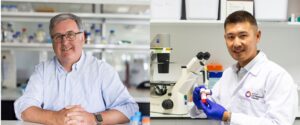
Supervisors: Professor Mark Daniell and Dr Gink Yang
Research Group: Corneal Research
Selection criteria: Medicine, Biotechnology or Biomedical science students who are interested in drug development and clinical application. The successful applicant will possess critical thinking and high-quality writing skills. The applicant also needs to work independently and adhere to the required timeline. Minimal WAM = 80.
About this project:
Corneal fibrosis ranks among the leading causes of visual impairment and blindness worldwide, predominantly affecting children, adults in high-risk occupations (e.g., construction or agriculture workers) and elderly individuals with systemic conditions.
Current standard treatments with topical corticosteroids and antimetabolites employ broad, non-targeted immunosuppression that affects multiple cellular pathways and also carries significant adverse effects. Corneal transplantation remains the only established sight-restoring intervention for prevalent fibrosis. However, global mean graft survival rates decline from approximately 89% at year one to 64% at year ten, with the poorest outcomes for vascularised corneal scars and leucomas that range among the most prevalent causes of corneal blindness.
This literature review-based project will critically assess current late-stage clinical trials, addressing whether these investigational therapies can overcome the limitations of existing treatments for corneal fibrosis. Specifically, the project aims to identify the ongoing late-stage clinical trials, the potential clinical impact and the reason for failed and discontinued approaches.
Questions?
If you have any questions about our research projects, please don’t hesitate to contact: education@cera.org.au
Supervisors: Professor Mark Daniell and Dr Gink Yang
Research Group: Corneal Research
Selection criteria: Medicine, Biotechnology or Biomedical science students who are interested in drug development and clinical application. The successful applicant will possess critical thinking and high-quality writing skills. The applicant also needs to work independently and adhere to the required timeline. Minimal WAM = 80.
About this project:
Corneal fibrosis ranks among the leading causes of visual impairment and blindness worldwide, predominantly affecting children, adults in high-risk occupations (e.g., construction or agriculture workers) and elderly individuals with systemic conditions.
Current standard treatments with topical corticosteroids and antimetabolites employ broad, non-targeted immunosuppression that affects multiple cellular pathways and also carries significant adverse effects. Corneal transplantation remains the only established sight-restoring intervention for prevalent fibrosis. However, global mean graft survival rates decline from approximately 89% at year one to 64% at year ten, with the poorest outcomes for vascularised corneal scars and leucomas that range among the most prevalent causes of corneal blindness.
This literature review-based project will critically assess current late-stage clinical trials, addressing whether these investigational therapies can overcome the limitations of existing treatments for corneal fibrosis. Specifically, the project aims to identify the ongoing late-stage clinical trials, the potential clinical impact and the reason for failed and discontinued approaches.
Questions?
If you have any questions about our research projects, please don’t hesitate to contact: education@cera.org.au
Novel Cas13 guide RNA design and validation for RNA base editing in inherited retinal diseases

Supervisors: Dr Isabelle de Luzy (primary) and Professor Rick Liu
Research Group: Genetic Engineering
Selection criteria: Medicine, Biotechnology or Biomedical science students who are interested in gene therapies and their translation to clinical application. The successful applicant will possess critical thinking and high-quality writing skills. The applicant must be able to work independently and adhere to the required timeline. Prior lab experience is desirable but not essential. Minimum WAM = 80.
About this project:
Inherited retinal diseases (IRDs) are a leading cause of blindness worldwide, collectively affecting approximately 1 in 4000 individuals, equivalent to over 2 million people worldwide. Despite this prevalence, many forms of IRD remain without any approved treatment, in part because some of the causative genes are exceptionally large, exceeding the packaging capacity of standard AAV vectors used for gene replacement therapy.
RNA base editing offers a route around this constraint: by correcting the effects of pathogenic mutations at the transcript level rather than replacing or editing the genomic locus.
This project focuses on designing and validating an RNA base editor targeting mutations in a large IRD-associated gene. We will use in silico predictions to identify potential off-target and bystander edits introduced by the RNA base editor, then validate on-target editing efficiency in vitro in human cell culture.
Questions?
If you have any questions about our research projects, please don’t hesitate to contact: education@cera.org.au
Supervisors: Dr Isabelle de Luzy (primary) and Professor Rick Liu
Research Group: Genetic Engineering
Selection criteria: Medicine, Biotechnology or Biomedical science students who are interested in gene therapies and their translation to clinical application. The successful applicant will possess critical thinking and high-quality writing skills. The applicant must be able to work independently and adhere to the required timeline. Prior lab experience is desirable but not essential. Minimum WAM = 80.
About this project:
Inherited retinal diseases (IRDs) are a leading cause of blindness worldwide, collectively affecting approximately 1 in 4000 individuals, equivalent to over 2 million people worldwide. Despite this prevalence, many forms of IRD remain without any approved treatment, in part because some of the causative genes are exceptionally large, exceeding the packaging capacity of standard AAV vectors used for gene replacement therapy.
RNA base editing offers a route around this constraint: by correcting the effects of pathogenic mutations at the transcript level rather than replacing or editing the genomic locus.
This project focuses on designing and validating an RNA base editor targeting mutations in a large IRD-associated gene. We will use in silico predictions to identify potential off-target and bystander edits introduced by the RNA base editor, then validate on-target editing efficiency in vitro in human cell culture.
Questions?
If you have any questions about our research projects, please don’t hesitate to contact: education@cera.org.au
Exosomes as Gene Delivery Tools for Retinal Degeneration to Stop Blindness
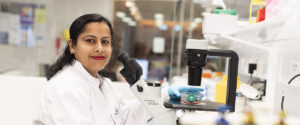
Supervisor: Dr Sushma Anand
Research Group: Retinal Gene Therapy Unit
Selection criteria: Medicine, Biotechnology or Biomedical science students who are interested in drug development and clinical application. The successful applicant will possess critical thinking and high-quality writing skills. The applicant also needs to work independently and adhere to the required timeline. Minimal WAM = 80.
Timeline: flexible
About this project:
Retinal diseases are a major cause of blindness, with limited therapeutic options.
This project aims to revolutionise retinal therapy by harnessing exosomes, naturally occurring extracellular vesicles, as targeted vehicles for drug and gene delivery. Focusing on Macular Telangiectasia Type 2 (MacTel) and Stargardt disease, the project will engineer exosomes to deliver supplemental serine and large therapeutic plasmids encoding retinal-protective genes that exceed viral vector capacity. Using advanced cell and preclinical models, this research will evaluate delivery efficiency and therapeutic efficacy. The outcomes could establish exosomes as a next-generation platform to prevent blindness and restore retinal health.
Retinal diseases are a leading cause of blindness, affecting millions of people worldwide and significantly diminishing quality of life. Despite major advances in biomedical research, effective treatments for many retinal degenerative diseases remain limited. This Honours/Masters research project aims to transform retinal disease treatment by developing next-generation exosome and gene therapy approaches for targeted retinal drug delivery.
The project will focus on Macular Telangiectasia Type 2 (MacTel), an incurable retinal disease characterised by low serine levels and the accumulation of toxic deoxysphingolipids (deoxySLs), which contribute to progressive retinal degeneration and vision loss. The project will also examine how engineered exosomes can serve as non-viral therapeutic carriers, offering potential advantages over conventional viral vector systems in precision medicine.
The student will gain hands-on experience in cutting-edge molecular and cellular techniques, including:
- Retinal cell culture and disease modelling
- Microscopy
- Western blotting.
Questions?
If you have any questions about our research projects, please don’t hesitate to contact: education@cera.org.au
Supervisor: Dr Sushma Anand
Research Group: Retinal Gene Therapy Unit
Selection criteria: Medicine, Biotechnology or Biomedical science students who are interested in drug development and clinical application. The successful applicant will possess critical thinking and high-quality writing skills. The applicant also needs to work independently and adhere to the required timeline. Minimal WAM = 80.
Timeline: flexible
About this project:
Retinal diseases are a major cause of blindness, with limited therapeutic options.
This project aims to revolutionise retinal therapy by harnessing exosomes, naturally occurring extracellular vesicles, as targeted vehicles for drug and gene delivery. Focusing on Macular Telangiectasia Type 2 (MacTel) and Stargardt disease, the project will engineer exosomes to deliver supplemental serine and large therapeutic plasmids encoding retinal-protective genes that exceed viral vector capacity. Using advanced cell and preclinical models, this research will evaluate delivery efficiency and therapeutic efficacy. The outcomes could establish exosomes as a next-generation platform to prevent blindness and restore retinal health.
Retinal diseases are a leading cause of blindness, affecting millions of people worldwide and significantly diminishing quality of life. Despite major advances in biomedical research, effective treatments for many retinal degenerative diseases remain limited. This Honours/Masters research project aims to transform retinal disease treatment by developing next-generation exosome and gene therapy approaches for targeted retinal drug delivery.
The project will focus on Macular Telangiectasia Type 2 (MacTel), an incurable retinal disease characterised by low serine levels and the accumulation of toxic deoxysphingolipids (deoxySLs), which contribute to progressive retinal degeneration and vision loss. The project will also examine how engineered exosomes can serve as non-viral therapeutic carriers, offering potential advantages over conventional viral vector systems in precision medicine.
The student will gain hands-on experience in cutting-edge molecular and cellular techniques, including:
- Retinal cell culture and disease modelling
- Microscopy
- Western blotting.
Questions?
If you have any questions about our research projects, please don’t hesitate to contact: education@cera.org.au